
It’s Not New in Georgia. What You as a Consumer Should Know about Buying a House in Georgia... and How It May Have Changed Since the Last Time You or Your Parents Bought a House.
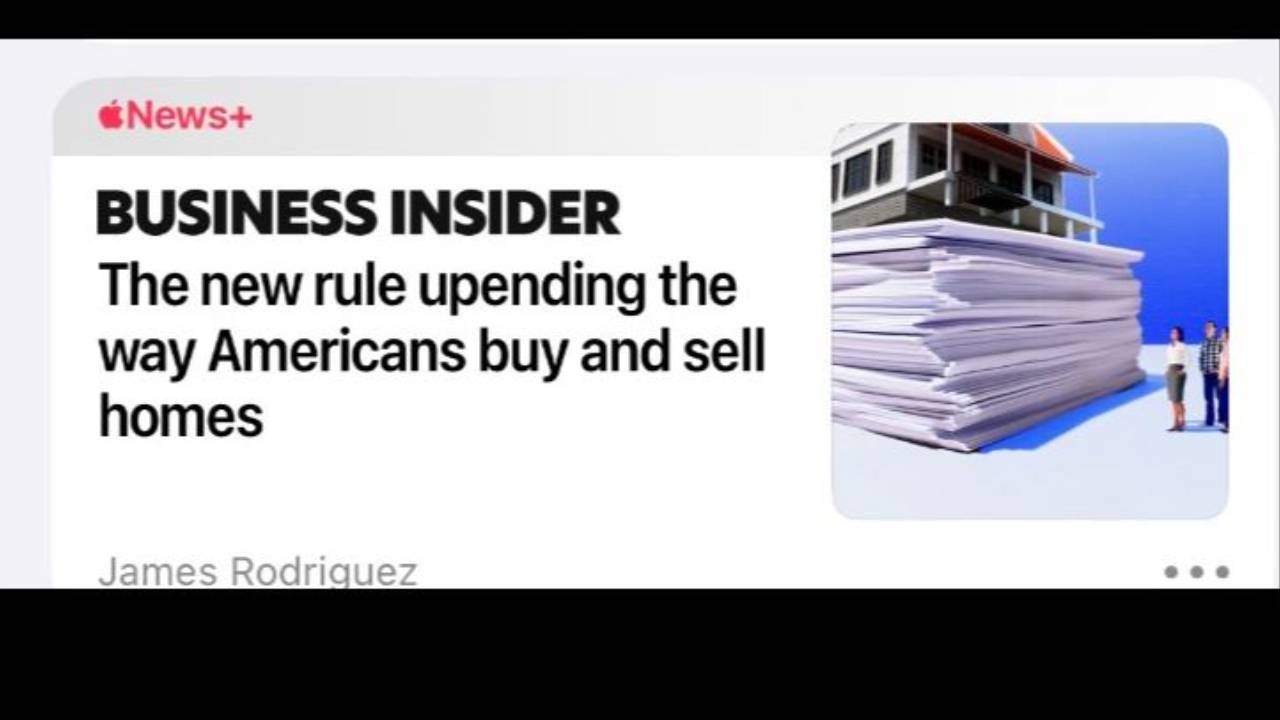
My friend Larry texted me an image and a question. The image was of a recent post from Business Insider said The new rule of upending the way Americans buy and sell homes.
The article, Real estate’s new paper trap: Homebuyers are getting stuck in terrible deals with their real estate agents, and it’s costing them big money, written by James Rodriguez, was posted July 22, 2026. Here’s the link:
My short answer to Larry once I read the article was, “Not new. 2 years old change because of the law suit.” (BTW, lawsuit is one word not 2. But in full transparency, I used two words in my text. In this article, I’ll spell it correctly! :)
As I read, the article, a bajillion thoughts were running through my head. I thought I’d write this blog post to document those bajillion thoughts. Then I came to my senses and realized nobody’s going to want read those ramblings. Trust me.
So instead, I want to focus on the facts as they pertain to the state of Georgia and real estate and what you as a consumer should know about buying a house in 2026 and beyond.
The Article’s Complaint & Pre-Lawsuit Context
The article starts with a story of a couple who were unhappy being stuck with a real estate agent who they couldn’t fire him without paying a penalty.
The article tied this situation back to changes made as a result of a 2024 settlement from a lawsuit in Missouri that had an impact nation-wide. If you want more details about the lawsuit, try this post from the National Association of Realtors.
https://www.nar.realtor/the-facts/nar-settlement-faqs
Back in the “old days” before the lawsuit, we in Georgia had something called a Buyer Brokerage Engagement Agreement. Not all states had them before for the lawsuit. But Georgia’s REALTORS did.
The “best practice” was to reach an agreement with prospective buyer’s before showing them properties. The agreement disclosed how much compensation the buyer’s brokerage could be paid. And, if the seller wasn’t paying the buyer’s brokerage compensation, the agreement specified what financial obligation the buyer owned their brokerage upon closing on the house.
The reality was that before the lawsuit, many agents would show houses without having an agreement in place.
Sometimes that served agents well. The agent was able to develop a relationship and trust with people who would become clients. Other times, agents lost out. They spent time, energy, and gas money showing properties and then received no compensation when the homebuyers used a different agent to buy the house.
Now, Written Brokerage Agreements Are Required Before Showing a Property
Because of the 2024 settlement, for any Realtor (defined as a member of the National Association of Realtors), for members of the firms that were part of the settlement, or for organization that wanted to be protected under the terms of the settlement, it is required to have an agreement in place before showing a property.
In other words, if you haven’t agreed to the terms by which the brokerage will be compensated, most real estate agents will not show you the house.
That is how the couple in the Business Insider article ended up with their agent. Zillow sold the lead to that agent. The agent was required by the settlement to have an agreement in place before he could show the property. The home buyers signed the agreement.
What You Should Know about Buyer Brokerage Agreements in Georgia
In Georgia, we have non-exclusive and exclusive buyer brokerage relationships. Those relationships are documented in writing with a buyer brokerage engagement agreement.
The agreements:
- Disclose what compensation the brokerage will receive
- Obligate the home buyer to pay the brokerage’s compensation
- Direct the brokerage to seek to have all or a portion of the buyer’s brokerage compensation paid by the seller or the seller’s brokerage
What Signing an Agreement Can Feel Like If You Don’t Know the Agent
People have compared the need to sign a buyer’s brokerage engagement agreement before seeing a house can feel like getting married before you’ve even dated your real estate agent. Especially if you’re hiring an agent you’ve never met before.
What You Need to Know as a Consumer: It Doesn’t Have to Be All Or Nothing
What you need to know as a consumer is that brokerages and their individual agents have the ability to make modifications to the agreement to allow them to show the property but avoid putting the home buyer in the position of feeling like they’re married to a particular agent indefinitely.
For instance, all parties could agree to put the agreement in place for only a particular property. Or for only a short period of time to see a few properties over a weekend.
Ultimately, the brokerage and/or their agent chooses whether or not to being open to such an arrangement.
If you’re not sure if you’re going to enjoy working with your agent or if they’re going to be responsive to your needs, you can ask for the agreement to have some limitations. But the individual agent may choose to say no. Or a brokerage may have a policy with their agents that they will not make modifications.
What Went Wrong in the Article and How Might That Apply to You?
In the example from the Business Insider story, the home buyers were obligated to pay the brokerage for terminating the agreement. My guess is the brokerage or the agent added that termination fee so that they could recoup costs for their time and effort in showing the couple multiple properties if the home buyers ultimately decided not to buy a house or to use another agent.
I’m sure that felt very unfair to the couple as they weren’t getting the responsiveness they expected from their agent.
So, what went wrong? Other than the agent not measuring up to the couple’s expectation?
From the article, we can’t be sure.
Did the agent not explain the cancellation fee?
Did the home buyers sign the form without reading it? We are a culture who signs without reading... after all, when was the last time you read the terms and conditions that came across for the new app you downloaded?
Did the agent and home buyers not have a mutual understanding of what it meant for the agent to be responsive to the client’s needs.
Some combination of all of this?
We may never know the answers to these questions. But this example can lead what you should consider when hiring a real estate agent to buy a house.
Hiring a Good Real Estate Agent
It helps if you start by connecting with a good real estate agent.
How do you find a good real estate agent? Here are some ideas:
- Call your last real estate agent if you thought they did a good job. If they retired, ask for a referral.
- Ask friends, family, and people you trust if they liked their real estate agent.
- Ask a real estate agent outside the area if they can refer you to someone where you’re moving to.
Personal experience and referrals from someone you trust are likely your best bets against a disappointing outcome.
A Good Real Estate Agent Cares about Your Needs
A good real estate agent should do a consultation to find out why you’re looking to buy a home, what’s important to you in considering the house you’ll buy, what characteristics you need in a home and why.
I consider myself a good agent.
I don’t have a penalty for canceling the contract to work with me.
When I’m working with a new client, I bring up the fact that if something starts happening and they get frustrated working with me, please bring it up so I can try to fix the issue. And if they decide they want to fire me, they have that option. I don’t want someone who doesn’t want to work with me.
If you can’t find an agent from trusted sources or if you decide to press the button on Zillow to contact an agent to see a house, then be sure to ask the questions below. And even if the agent comes as a referral, maybe still ask these questions.
Questions to Ask Your Real Estate Agent Before Signing the Agreement
Can I have some time to read the agreement?
Ask for a copy of the buyer brokerage engagement agreement before you agree to meet an agent to see the house. They should be able to send the document electronically or print it out so you can review it before the meeting. Ask questions on anything you don’t understand in the agreement. This is a contract to work with a person. It’s OK to take the time to read every word.
What happens if we don’t like working together? Can I get out of the agreement? Will I owe you a fee if I don’t want to work with you?
When I’m working with a new client, I go through the “fill in the blank” portions of the standard form and take the time explaining how I will be compensated so that clients understand their obligation to pay my compensation if the seller or seller’s brokerage does not.
While I don’t charge a cancellation fee for a client that wants to fire me, if I did have a cancellation fee, I feel confident that I would cover that fact to make sure prospective clients understood.
Your best bet is always to read the entire contract. On the Georgia Association of Realtor’s Buyer Brokerage Engagement Agreement forms, look particularly at Page 1, Paragraph 4.C.(3) and at Page 7 under the SPECIAL STIPULATIONS section to see if the brokerage has a fee associated with canceling the brokerage agreement prior to buying a house. Also carefully review Page 2, Paragraph B.1., and B.4. because you may still owe compensation even if you fire your agent or brokerage.
If the agent is using other forms the Georgia Association of Realtors form, be sure to read it thoroughly too and ask questions if you don’t understand.
Can We Adjust the Terms so that We Can Have a Trial Period or Just Have an Agreement for a Specific House?
If you’re not sure you want to work with an agent without first getting to know them, then ask if they’re willing to limit the terms under which you’ll work together. They may still say “no” to the request. But if you don’t ask, you don’t get.
Understand that You Are Committing to Pay Your Real Estate Agent
An import part of signing the buyer brokerage agreement is to acknowledge that if the seller does not pay your brokerage’s compensation then you are on hook to bring additional money to closing to pay your brokerage’s compensation.
For some homebuyer’s that may not be a big deal.
For homebuyers that are tight on funds when it comes to a down payment and to closing costs, that could be a deal breaker.
As a result, you’ll want to ask your real estate agent if the home seller is willing to pay all or part of your brokerage’s compensation.
With the new rules, Multiple Listing Services (where real estate sales are posted) that wish to be covered by the 2024 settlement are no longer allowed to post what compensation, if any the seller is willing to pay the buyer’s brokerage.
If the seller doesn’t outright state that they will agree to pay your brokerage’s compensation, you and your agent have options:
- Make paying your buyer brokerage compensation part of the offer. By making it part of the offer for the seller or the seller’s brokerage pay the buyer brokerage compensation, you’re making them say “no” to an offer to buy their house. If they don’t have other offers, they may decide to say yes or at least provide a counteroffer.
- Ask the seller to pay concessions to you as the buyer. We often refer to this as the seller paying closing costs for the buyer. You can use the concessions to pay your brokerage or your closing costs or a combination of both. Either way, when the seller agrees to pay concessions, that’s less money out of your pocket that you need to bring to closing and can help you make the deal work with your financial situation.
- Keep looking. Find another property where the seller is willing to pay your brokerage compensation or willing to work with you on concessions to make a deal that works for your personal situation.
Things Will Continue to Evolve
Like anything else in life, real estate and dealing with lawsuits will continue to evolve with time. Educate yourself on what you should know as a consumer who wants to buy a house. Or find a good advocate in a professional real estate agent to advocate and educate you through the process.
And if you’re in the North Atlanta Metro area, specifically in Dekalb & Fulton counties north of I-20, or Gwinnett, Forsyth, Cobb or Cherokee counties, and you’d like to interview me for the job as your real estate agent, call or text me at 770-597-1108.
